Monday, April 6, 2015

Pilgrimage

How about a bicycling pilgrimage of the Buddhist temples of the Catskills and the Mid-Hudson Valley?

It'd probably end up being about 400 miles, with plenty of hills. Perhaps ten days would be a reasonable schedule, leaving a bit of time to spend at each temple. The next challenge is to find places to stay. There are a few New York State campgrounds not too far:

Here is a nice map of New York campgrounds: Allstays

At Zen Mountain Monastery:

At Kunzang Palchen Ling:

At Karma Triyana Dharmachakra:

Initial route ideas:

Saturday, February 28, 2015

The Dress

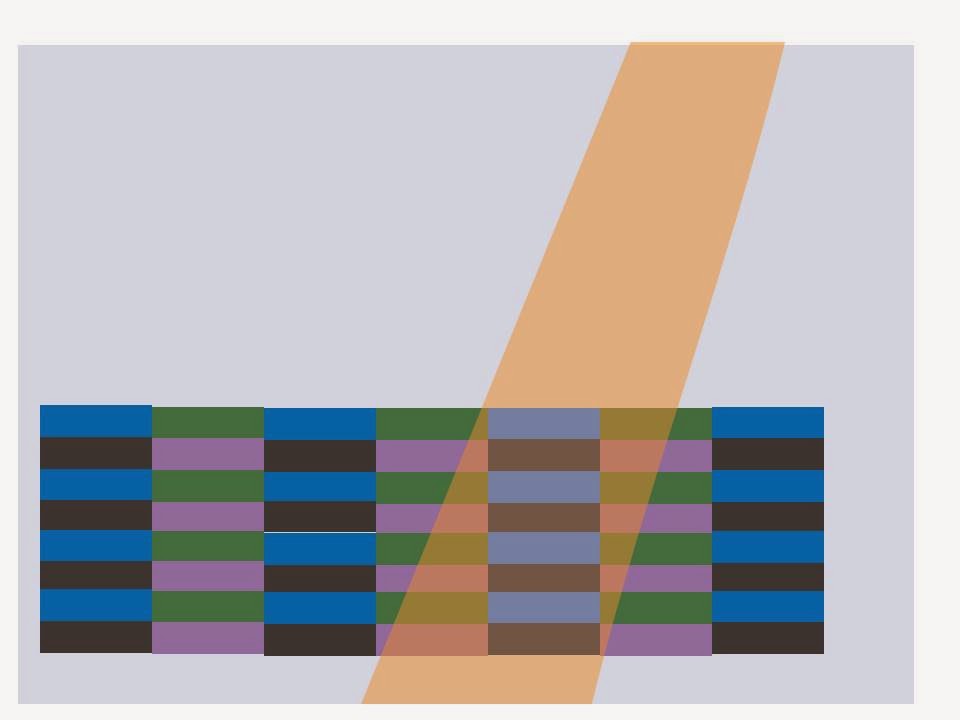
I have been having far too much fun with the wonderful color illusion of the dress that has been making the internet rounds lately!

I copied the main colors of the stripes from the photograph, and tried to create two different contexts, one where the colors are easy to interpret as blue and black:

another where it is easy to interpret them as white and gold:

It's a nice illustration of interdependence!

Maybe it is too shocking to believe, but...

Sunday, February 22, 2015

Hanson-11

I love exploring the relationships between mathematics and music. My exploration tends to be more hands-on research than library research. So I am surely rediscovering many old ideas, and I almost never learn the proper terminology. But I do have a lot of fun!

Lately I have been exploring a pitch class set that is sometimes called Hanson[11]. Others have certainly explored this, e.g. http://dkeenan.com/Music/ChainOfMinor3rds.htm and http://xenharmonic.wikispaces.com/Kleismic+family which even include some music composed in this system. I must confess that the folks that work in this area have developed an enormous collection of terms and ideas, very little of which I understand. I am going to explain here some of the ideas that have led me to this approach.

Most any musical pitch system is based on a collection of intervals, i.e. frequency ratios. The most fundamental intervals are simple rational numbers. E.g. an octave is the ratio 2:1 and a perfect fifth is a ratio of 3:2. There is a simple algebra of intervals: if pitches P and Q are separated by an interval X, and then Q and R are separated by an interval Y, then the interval from P to R will be X*Y, the multiplicative product of X and Y.

One can certainly make very good music by starting with a single pitch and a small collection of primitive rational intervals. The various combinations of these intervals will generate an infinite collection of more complex intervals. This system is known as Just Intonation.

The challenge with just intonation is that different combinations of intervals can result in complex intervals that are very close together. The standard tuning for a guitar illustrates this quirk. The intervals between successive pairs of strings on a guitar are a fourth from E to A, a fourth from A to D, a fourth from D to G, a major third from G to B, and a fourth again from B to E. From the first E to the last E should be two octaves. In just intonation a fourth is the ratio 4:3 and a major third is the interval 5:4. So the complex interval which is the product of the simple intervals between the strings is 320:81. But two octaves would be 4:1 = 320:80. The small interval between these two intervals is 81:80, known as the syntonic comma.

There are many such small intervals that arise in just intonation. In fact, the infinite collection of complex intervals will fill the entire pitch space densely. In notating music, in building musical instruments, and in performance, managing such an infinitely dense collection of pitches is practically impossible. Still, the underlying music concept can adhere to just intonation, while the notation and the instrument can simply collect pitches into clusters and use a single pitch to stand for the cluster. Analysis might still reveal the underlying intention. Perhaps our ears even interpret the sound relationships as the appropriate just intervals, at least when the musical sense is clear.

But Easley Blackwood's book The Structure of Recognizable Diatonic Tunings shows that the mainstream European tradition from Bach to Mahler does not work this way. A particular note to be played at a particular time in a piece of music will stand related to several other notes, e.g. other notes played at the same time, or immediately before or after, or in corresponding positions in musical phrases played not too far away in time. One set of relationships might imply one just intonation interpretation of a note, while another set of relationships implies a different interpretation. And this sort of ambiguity is pervasive in the European tradition. A lot of what is happening with the music is a kind of playing with ambiguities, with musical puns.

From this perspective, what makes a tuning useful or interesting is the set of ambiguities that it provides! Because different tuning systems work with different ambiguities, music won't in general translate from one system to another. It's like trying to translate puns between languages. But of course each language can support a wonderful collection of entertaining and insightful puns. So different tuning systems should support music, though different music.

My fascination for quite a while has been the microtonal tuning system that divides an octave into 53 equal parts. More recently I have been looking at ways to pick a subset of the 53 pitch classes with which to make music. In the conventional tuning system that divides an octave into 12 equal parts, music typically works with just 7 of the 12 pitch classes at a time, though there might be accidentals or key changes too in a piece of music. One way to think about these 7 pitch classes is as a contiguous region of the circle of fifths. I.e. the seven notes C D E F G A B can be arranged as F C G D A E B. While the primary structure of this set is governed by this sequence of intervals of a perfect fifth, there are other relationships among these, e.g. C to E is a major third. This ambiguity, is C E four perfect fifths or a major third, is again the blurring of the small interval of a syntonic comma.

What I am working with now is a set of 11 pitch classes out of the total palette of 53. This set is generated by 10 intervals of a minor third. When an octave is divided into 53 microsteps, a minor third is 14 microsteps. We can start this set of 11 pitch classes from any of the 53 pitch classes, just as a major scale can start from any of the 12 pitch classes of conventional tuning. Here is a diagram of one set:

In this diagram, each pitch class has six neighbors. The intervals between the neighbors are perfect fifths (31 microsteps), perfect fourths (22 microsteps), major thirds (17 microsteps), major sixths (36 microsteps), minor thirds (14 microsteps), and minor sixths (39 microsteps). The first important observation to make about this subset of 11 pitch classes is that, while the subset is generated by a sequence of minor thirds, the subset also includes pairs of pitch classes separated by fifths. This property is due to one of the ambiguities that arise when dividing an octave into 53 equal parts. The small gap between a fourth and 6 minor thirds is known as a klesma. The blurring or tempering of the kleisma in this system corresponds to the tempering of the syntonic comma in the convention 12 pitch class system.

Another nice feature of this set of 11 pitch classes is that when the pitches are arranged in order, e.g. 0 8 11 19 22 25 33 36 39 47 50 53, there are just two sizes of intervals that occur, 3 microsteps and 8 microsteps. This is analogous to the half step and whole step of a conventional major scale.

Here is what this pitch class set sounds like:

http://soundclick.com/share.cfm?id=13004205

http://soundclick.com/share.cfm?id=13004263

http://soundclick.com/share.cfm?id=13043974

Friday, November 28, 2014

Decolonization

I have come across a couple of decolonization proposals recently. Some aspects of the thinking around this strike me as teetering on the edge of confusion and therefore worth exploring.

Colonization and decolonization are all about us and them, right down at the foundation of dualism. At a relative conventional level, of course, it is common and even sometimes practical to divide people into groups or categories of one sort or another. Genders, races, nationalities, generations, classes, and professions: these are some of the most basic divisions.

Any sort of category system, any way of labeling phenomena, will have some more or less limited validity. One major challenge is how to deal with borderline cases. When we are attached to our concepts, we tend to deny phenomena that don’t fit them. One sort of denial is just to turn away, not to acknowledge their existence. Another sort of denial is an active intervention, to force phenomena to fit or to eradicate those that refuse.

Gender is of course a prime instance where reality often enough doesn’t fit the simple dominant conceptual framework and where every form of denial gets put into use. To deny the possibility of some way of being is clearly a form of oppression against those who actually embody that way, but it seems like a different pattern of oppression than colonization.

Another form of oppression that doesn’t seem to fit the term colonization is genocide, where the existence of some group of people is acknowledged, but no sort of living relationship is accommodated.

Colonization is the imposition of a particular sort of exploitative relationship, highly inequitable. The existence of the subordinate group is acknowledged to have value but that value is not inherent but merely a use value: its actual or potential use in benefitting the superior group one way or another.

Colonization is a complex process. For example, members of the colonized group often participate in maintaining the colonization in various ways. The colonizers can divide the colonized into classes, the most privileged of which might well then consider their relatively elevated position worth maintaining. But the colonizers can also impose such widespread social restructuring that even the most oppressed of the colonized can start to conceptualize themselves in the terms defined by the colonizers.

A difficult point, though, is that part of the process of colonization is the maintenance of the boundary between the colonizers and the colonized. As with any boundary, reality will always intervene to mix things up one way and another. It requires constant police work to repair the holes in the fence again and again.

What makes this point difficult is that one of the typical oppressive strategies of the colonizers is to deny the legitimacy of the existence of the colonized group. The way of being of the colonizers becomes the norm, while the colonized must make do with being abnormal, despite often being numerically superior. To examine the mere conventionality of the distinction between colonizer and colonized is not so different than denying the legitimacy of the existence of the colonized group. But the difference might be a key that opens a door to let in light and fresh air.

Within the United States we have a complex system of categories by which we group ourselves. The system doesn’t seem to be stable. Certainly the divisions of race and gender seem to remain well entrenched. Maybe the career of Steve Jobs will work to exemplify some of the instability. Jobs was a college drop out. Apple computers were the cool alternative to the corporate squareness of IBM and Microsoft. But of course by now Apple is as corporate as any other corporation. Bill Clinton supported the NAFTA bill. Are trade barriers progressive or regressive? Maybe that touches the nerve. Between the future and the past, which is the colonizer and which the colonized?

For Voltaire, the answer was obvious. The past was in power. The past was crushing the future. Enlightenment was a matter of empowering the future and dissolving the power of the past.

But for us today, progress smells somewhat rancid. The problems surely go back to the beginnings of the industrial revolution, for example the harsh conditions the workers were subjected to. The World Wars brought us the military-industrial complex. Now… just today I was seeing headlines about overly cozy relations between Google and the NSA. Perhaps climate change, though, is the deepest challenge to the direction in which we have been headed, where our towering prosperity appear very likely to topple and crush us.

If the future has come to colonize us, must we then free ourselves by rejecting its conceptual structures, of globalization, quantification, and mobility, and take up instead the alternative structure offered by the past, of localization, nationalism, ethnicity, and tradition?

It might well be worthwhile, though, to examine how the structure of this dichotomy is itself oppressive. It reminds me of high school. I was in the second class to graduate from Homestead Junior Senior High School, outside of Fort Wayne, Indiana. Our principal had constructed for us some traditions that we were to conform to: Senior Hall was one, if I recall correctly. The future constructs the past as a sort of boogey man with which to frighten us into submission. At the same time, the future is a marketing tactic of the past, enticing us to join forces with program.

The wisdom that frees us from the delusion of dualistic clinging is not nihilistic rejection, but deep insight into the relationships between the poles of the duality, relationships through which the poles create each other. Are the colonizers and the colonized the same or are they different? That question is trapped at the surface. The colonizers and the colonized are always growing out of each other organically. Insight grows out of intimacy: wisdom grows out of meditation. Intimacy requires respect but also close contact.

Humans have always lived locally and globally at the same time. It’s that interplay that creates life and meaning. If we run to the illusory security of the easy answer, the secure conformity to a stable conceptual framework, we will have bought into our own oppression.

Thursday, October 30, 2014

Adventure

Everyone needs a bit of adventure in life. Some folks surely get handed more adventure than they really need. But many of us manage to live lives of reasonably secure routine. Somehow connecting to the vast world that is beyond one's control, that is a very valuable way to stimulate awareness and curiosity.

Adventure needn't involve travel. One can try cooking new styles of foods, or learning a new craft or a new language, etc. And of course much travel is very routine, lacking in any dimension of adventure. But adventure travel is surely a classic and effective way to shake oneself out of the daily routine.

Adventure travel needn't involve huge distances or great risk. Alastair Humphreys has proposed microadventures as an approach to adventure that can be challenging without being extreme.

Adventure is really about discovery. Discovery always involves some degree of challenge, as it represents a confrontation with the unknown. Probably every adventure involves learning about oneself as well as learning about the world, though the proportion surely varies with the specific type of adventure.

A goal is an important, even essential, aspect of an adventure. It is a goad that drives one out of one's comfort zone. Finding or creating a goal that is effective, stimulating and motivating without being overwhelming and discouraging: that is certainly a central puzzle of adventuring.

Sometimes a goal just falls into your lap. My friend David handed me a map from the Rondout Valley Growers Association. The map identifies some twenty-odd local farmers and other small businesses. Each business has a supply of its own stickers. By visiting the business, one can receive one of their stickers which one can affix at that business's spot on the map. I love exploring the local area on my bicycle. What could be more natural: ride my bike to collect those stickers!

I have been at the project for several months. Sometimes I will figure out a route that lets me collect several stickers. Other times a few weeks will go by when I barely get out on my bike, never mind the stickers. Some businesses can't find their stickers... sometimes the person on duty doesn't even know about the map and sticker program. I have been bringing along a pen: if I make it to the business on my bike and the stickers are not at hand, I just ask the person there to mark my map somehow with the pen. Good enough for me!

Today I collected three stickers, which leaves me with only two more to go. I rode to the Catskill Native Nursery,

to Kelder's Farm,

and to Flying Change Farm.

With fifty miles of riding, those brief visits were only part of the adventure! Lots of beautiful scenery: Lower Sahler Mill Road,

and Airport Road.

Here's today's route:

Wednesday, October 22, 2014

Engaged Analysis

A thinking person will wonder about the nature of things. Which features of experience are real and which are merely ideas that color our perception? This distinction between a realm of reality and a realm of ideas may not be very useful though, despite its prevalence. Perhaps it is not as prevalent as it seems, but it certainly has become fundamental in the modern world, supported for example in the writings of Descartes. But how else can we think about things?

Let us think of the world as being composed of a network of situations or encounters. Each situation has some kind of polar or vector character. One can separate the two faces of a coin, but the result is simply two thinner coins, each of which again has two faces. A magnet is also like this. One can cut a magnet in two, separating its north pole from its south pole. But the result is simply two smaller magnets, each of which has a north pole and a south pole. With an encounter, the polar structure consists of subject and object, distinguishable but inseparable.

These elementary encounters are inter-related in a variety of ways. The twelve nidanas of Buddhist Abhidharma are one way to map out their flow. Perhaps my own thinking here is just a part of my own struggle to understand this map! Another map which is much more familiar to a modern industrial citizen, like me, comes out of organizational management theory. There is a cycle of activity which involves:

  1. recognizing a problem,
  2. envisioning future situations where that problem has been resolved,
  3. selecting one such future situation as a goal,
  4. considering possible paths to reach that goal,
  5. deciding to commit to a particular path,
  6. acting to move along that path,
  7. assessing the results of that action,
which leads to recognition of a new problem and another iteration of the cycle.

Another way that encounters are related is through composition or hierarchy. For example, assessing the results of an action can itself be a complex project consisting of many more detailed cycles of planning, action, etc. These sub-projects will surely have lateral relationships among each other as well.

The stable objects that we perceive would consist, from this perspective, as repeating patterns of encounters. My sketch of nested projects is surely no more than a tool to help jog one’s perception of the world from static objects to networked flows. The particular connections and flows involved in a particular situation might better be seen through a different lens.

For example, I might say a particular word at a particular point in a conversation. That particular utterance can be seen as a member in a variety of different families.

  • That same word has been used by various people at other times and places.
  • That word is one of the words I uttered during that conversation.
  • Uttering that word was one of my actions taken in pursuit of communicating an idea.
  • The uttering and the communicating were part of my effort to change someone else’s thinking about some topic.
  • This debate was just one of many where people who adhere to one particular school of opinion try to convince those of some other school. Perhaps this was a discussion about the advantages of internally geared bicycle hubs versus derailleur gearing. An outside observer might well note that I was just parroting the views commonly expressed on internet forums dealing with bicycles.
  • These debates might well reflect the tensions and conflicts between competing bicycle parts manufacturers or divisions within large manufacturers, together with their associated retailers, media representatives, etc.
  • At the same time, this word could reflect some habitual psychological drive where, for example, I tend to push terms and concepts to ever more abstract levels, both as a way to assert dominance but also as a way to isolate and insulate myself from the dangers of engaging with the uncompromising details.
  • And still the word could resonate with books I have been reading recently and the current trends in publishing and how editors use vocabulary to position their products within market categories of readers.
Any given encounter will be connected in countless such ways with every aspect or dimension of the world. In examining a particular situation it may be useful to sketch out a first few layers of these relationships, but the prioritization and limits to this elaboration need to be a function of the projects with which the examining person is involved. The question that can be answered is not so much, “What is this thing,” but rather, “How am I involved with this thing?”

Monday, October 13, 2014

Natural versus Artificial

I recently discovered and started to read the book How Mathematicians Think, by William Byers. I am thoroughly enjoying it and am amazed and delighted to see so well expressed and deeply explored a perspective very similar to what I have been cultivating. One core idea from the book is that the great fertile ideas are paradoxical. These paradoxes do get resolved, but never completely. They get resolved again and again, which is the dynamic nature of their fertility.

One of these great paradoxical ideas is the distinction between the natural and the artificial. An instance of this paradox is the puzzle of the role of practice in Buddhism. After all, the essential nature of our mind is already the same as that of the Buddha. If we could just let our natural mind express itself without the interference of artificial concepts, we would be enlightened! On the other hand, all that conceptual confusion is deeply habitual. Letting go of a habit most often takes dedicated persistent effort.

Even in the midst of a session of meditation, one confronts the paradox. The foundation of meditation is shamatha, a calm mind. To some degree shamatha is cultivated by relaxing, by letting go. On the other hand, one needs to maintain awareness, mindfulness, and the diligent persistence to continue to let go, i.e. to catch and correct the habit of grasping. Is meditation natural or artificial? Meditation becomes deeper through the interplay of these paradoxical poles, rather than through the resolution of the paradox with some formulaic answer.

In the arts one confronts this tangle. There is the fresh inspiration of one’s engagement with the world, with one’s muse, with one’s deeper self. But somehow this inspiration needs to be refined through practice, the cultivation of one’s craft.

In economics, the notion of a market is caught up in this paradox. The idea of a free market is an attempt to resolve the paradox through the pole of naturalness. But of course any market is structured by implicit or explicit rules. The rules themselves, in turn, may appear at times natural, at other times artificial. The paradox unfolds at level after level.

Should we be frightened by the Ebola epidemic? On the one hand, our society is naturally structured in a way that should be able to respond effectively to such an epidemic. On the other hand, perhaps an essential component of that natural structure is actually our fear which triggers our determination to pay close attention and take whatever action is necessary to respond effectively.

Should confidence in our ability to respond to a situation conflict with our determination to act in response to that situation? I remember being worried about finding a decent job, back when I was leaving school. Some of my friends told me that I shouldn’t be concerned because my skills and character would be sufficient to connect me with work. Ah, but concern and worry are part of my character! I get things done because I worry about the consequences of not getting them done. Whether I get things done naturally or artificially, I propose that it is a matter of perspective.

Not understanding that the basic nature of things is paradoxical, we can become paralyzed by the puzzle of whether our actions are natural or artificial, or we can become trapped in unreflective patterns. If we can learn to dance with the poles of the paradox, we can deepen the level of our actions to make a profound difference in our own lives and in our communities.